














INDUSTRY · HEALTHCARE & LIFE SCIENCES
When the EHR slows down, patient care waits
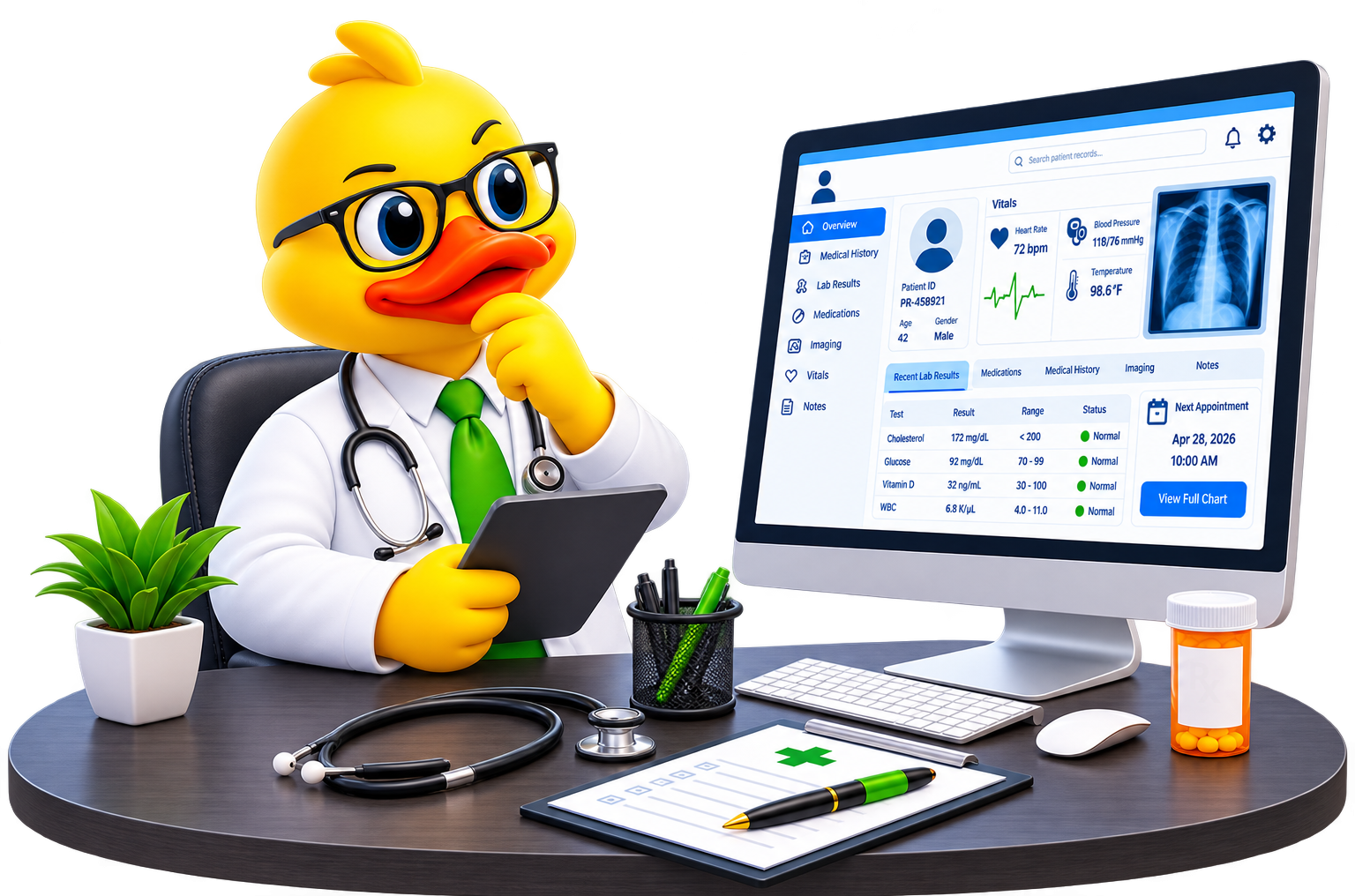
Clinicians can’t work faster than their systems. SQL Diagnostic Manager keeps the SQL Server behind EHRs, imaging, and scheduling fast and highly available — around the clock.
- NAgentless — nothing to deploy on clinical servers
- N24/7 availability monitoring
- NOn-prem, hybrid & cloud
10,000+
facilities served by SQL DM customer PointClickCare
24/7
EHR availability monitoring
0
agents on clinical servers
Years
of history for post-incident review
What’s at stake
Systems that can never be the reason care slows
Healthcare DBAs support applications where a slow query is a clinical event. Uptime is 24/7, change windows are tiny, and every incident invites scrutiny.
Round-the-clock uptime
EHR, imaging (PACS), lab, and scheduling systems run 24/7. There is no quiet window, and a failover that isn’t caught early becomes a care disruption.
Responsiveness is patient safety
Blocking and deadlocks that make an order set or chart hang aren’t just annoying — they slow clinicians at the point of care.
HIPAA & post-incident review
Every incident invites questions. Reconstructing what happened, when, from memory doesn’t satisfy governance or leadership.
Lean teams, big estates
A small team often monitors a large, mixed estate across hospitals and clinics — with no room for alert noise or agent sprawl.
What matters for healthcare
Patient-care-grade SQL Server monitoring
The SQL Diagnostic Manager capabilities that matter most to healthcare database teams.
Keep the EHR available
Would you see a sync issue before it forced a failover?
Deep AlwaysOn AG visibility — sync state, log send and redo queue depth, failover readiness — catches the early signals so high-availability clinical systems stay up around the clock.
Protect clinical responsiveness
Why is the chart hanging right now?
Live session monitoring shows blocking chains as they happen, and deadlocks are captured and visualized automatically — so a slow order set gets diagnosed in minutes, not after a shift of complaints.
Review any moment after the fact
“The system was slow during the night shift — what happened?”
Replay the full monitoring picture at any past point in time. It’s exactly the ‘look back at a particular moment’ capability large healthcare software teams rely on for post-incident review.
Cover the hours nobody’s watching
What happens when an alert fires at 3am?
Automated responses — run a script, open a ServiceNow ticket, page the on-call team — mean off-hours issues resolve or fully document themselves before they reach clinicians.

Proven in healthcare
Healthcare organizations trust SQL DM with critical systems
Figures below come from published IDERA customer case studies and materials.
Why teams choose SQL DM
Enterprise-grade coverage, on your terms
0
agents on your servers — full data collection with minimal overhead.
$0
ingest fees. Predictable per-instance pricing you can budget for.
1000s
of instances monitored from a single pane, without performance impact.
Years
of history in a repository you own — the basis for accurate forecasting.
Answers for healthcare teams
Frequently asked questions
Does SQL Diagnostic Manager help with HIPAA and healthcare compliance?
SQL Diagnostic Manager supports the availability and audit-review side of governance: it keeps clinical SQL Server systems monitored 24/7, retains performance history in a customer-owned repository, and can reconstruct any past moment for post-incident review. It is a performance-monitoring tool, not a compliance certification; for database security and change auditing, IDERA also offers SQL Compliance Manager.
Can it monitor Electronic Health Record (EHR) databases without adding load?
Yes. Its agentless architecture collects full performance data without installing agents on the monitored SQL Servers, so EHR and other clinical databases are monitored with minimal overhead.
How does it help keep clinical applications responsive?
It surfaces blocking chains in real time from the live session view and automatically captures and visualizes deadlocks, so the contention that makes a chart or order set hang is diagnosed quickly rather than after a shift of complaints.
Is it suitable for a large estate across multiple hospitals and clinics?
Yes. It is agentless and scales to thousands of instances from a single console, with adaptive baselines that keep alerts meaningful across many differently-behaving servers — well suited to a lean team covering a large healthcare estate.
Start now
Keep the systems clinicians depend on fast and available
Start a full-feature trial and monitor your clinical SQL Server estate — agentless, in minutes.
- N14-day free trial
- NNo credit card
- NAgentless setup